A First Visit to a Club Match
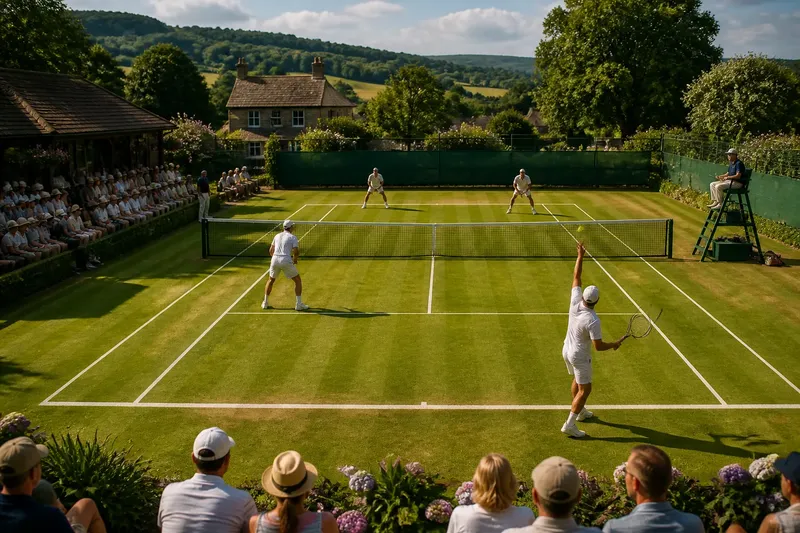
A first visit to a club match feels easier with a simple plan: choose a considerate seat, follow one rally pattern, and learn the quiet courtesies.
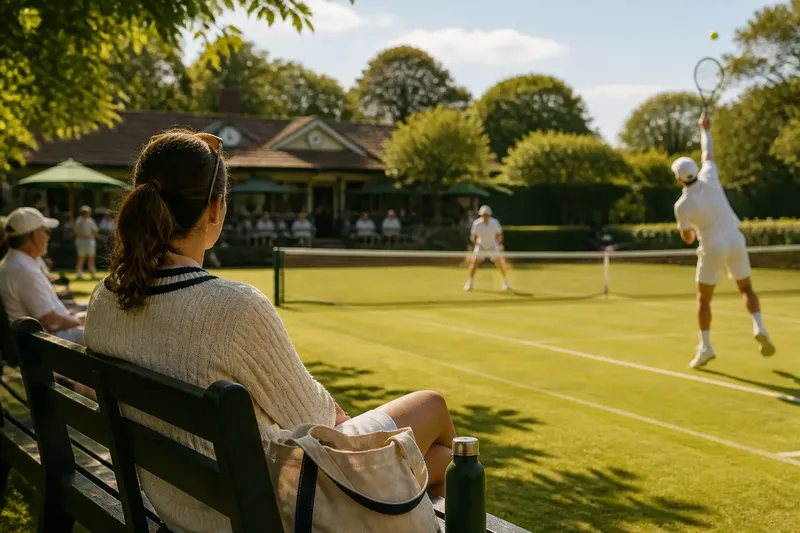
The most common mistake on a first visit to a club match is trying to understand everything at once; it can turn a pleasant afternoon into a blur of scores, calls, and unfamiliar routines. A first visit to a club match is easier when you choose a comfortable place to sit, follow one pattern in the rallies, and let the small courtesies around the court make sense as you watch.
1. Choose one court
Look for a court where you can see most of the playing area without standing in a doorway or crowding the fence. At a club with several matches underway, a court near the entrance may be tempting, but people walking past can distract players and block the view.
If a match is already in progress, pause outside the playing area and look for a natural break before approaching. The end of a game or a change of ends is usually less disruptive than walking behind a player while a point is underway.
You do not need to find the most prominent match. A quieter court can make it easier to hear the score and notice how a rally develops, and a friendly match between club members can be just as absorbing as a tournament-style contest.
2. Find a considerate seat
Choose a bench or spectator area if one is available. Otherwise, stand where you can see without leaning over the fence, blocking a gate, or occupying the space players use to retrieve balls. Avoid moving around while a point is live.
Try a spot behind one baseline or along the side of the court, depending on the club’s layout. Behind the baseline, you may see the depth of shots more clearly; from the side, it may be easier to follow the players’ movement across court. Neither view tells the whole story, so pick the one that feels easiest to watch.
Keep bags, drinks, and phones close to you rather than in a walkway. If someone arrives and seems to need the seat or space, make room where you can. A spectator’s position should be comfortable without becoming part of the match.
3. Learn the score in chunks
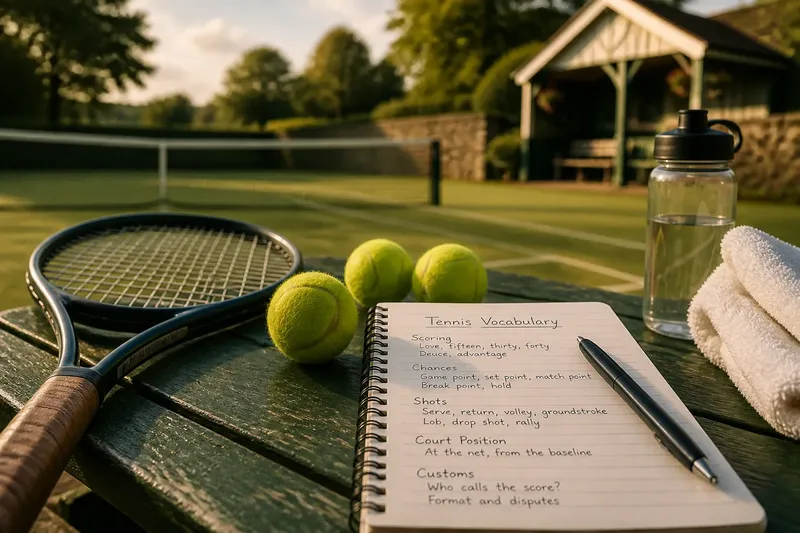
Tennis scoring can sound odd when heard for the first time. Instead of trying to memorize every detail at once, listen for the server’s score and the receiver’s score before each point, then notice when the players pause to change ends or start a new game.
If you are unsure, a discreet glance at a scoreboard can help. Some clubs use a flip-style board by the court; others may have no display at all. You can simply watch the point and pick up the score as it comes. There is no need to ask during play.
Imagine you arrive while two players are midway through a game and hear the server call the score before each serve. You settle on a bench, listen for the next call, and notice that the players switch ends after a later game. The observable result is a clearer sense of the match’s rhythm without needing to know every scoring detail immediately.
4. Follow one rally pattern
Give yourself one small thing to notice rather than trying to judge every shot. For example, watch how a player responds when the ball lands deep: do they hit back toward the middle, angle the reply, or move forward when a shorter ball appears?
Another useful pattern is the serve and return. Notice whether the returner stands close to the baseline or farther back, and whether the server follows the serve toward the net. These details help you see the point as a sequence of decisions, not just a string of swings.
Stay curious rather than treating one rally as a lesson in who is playing “correctly.” Players may choose different options because of their strengths, the score, or the conditions. Watching a single pattern gives your attention somewhere to rest while leaving room for surprises.
5. Keep quiet during points
Once a point starts, silence is the safest courtesy. Avoid talking, calling out, or reacting loudly while the ball is in play. Even a cheerful comment can make it harder for a player to concentrate, especially on a close court where voices carry.
Between points, keep conversation low and brief. If someone beside you explains a rule, listen without turning the match into a running commentary. Players and other spectators may appreciate the same quiet space for different reasons.
Applause is usually most welcome after a well-played point or at the end of a game, but follow the mood of the people around you. At an informal club match, a simple smile or a quiet “nice shot” during a break can feel more natural than a loud cheer.
6. Notice court boundaries
A tennis court is also a working space. Players may need to cross behind a neighboring court, collect a ball that has rolled in, or wait for another point to finish before moving. Keep gates and paths clear, and do not step onto a court to retrieve a loose ball unless a player asks you to do so.
If a ball rolls near you, leave it where it is until the players stop and indicate what they need. Sending it back at the wrong moment can interrupt a point on an adjacent court. If a player calls for the ball, roll it gently toward an open area rather than throwing it over the fence.
Clubs differ in their court arrangements and visitor customs, so follow posted notices and any request from the players or staff. That small bit of attentiveness helps keep the match flowing without making your visit feel formal or complicated.
7. Ask at the right moment
Questions are welcome when the match has paused, but avoid approaching players while they are changing ends, preparing to serve, or speaking with an opponent. If you are not sure whether it is a good time, wait until the match ends or ask a club staff member instead.
A short question is often enough: “Is this court open for spectators?” or “Would you mind telling me when the next game starts?” If you want to understand a call or scoring term, ask someone nearby during a break rather than interrupting the players.
It is also fine to enjoy the match without introducing yourself. A first visit does not require you to know club members, understand every custom, or stay for the whole contest. You can watch for a while, thank anyone who helped, and leave quietly between points.
8. Leave the court calmly
Before you go, check that you have not left a bottle, wrapper, or other item behind. If you are seated near a gate, wait for a pause in play before using it, and close it gently if the club’s setup calls for that. A quiet exit is considerate to both players and anyone watching beside you.
If the match is still going, you do not need to wait for its conclusion. Choose a break between points or games, then move without calling across the court. If a player thanks you for watching, a brief reply is enough; there is no expectation of a long conversation.
A first visit to a club match can be as simple as finding a clear view, following one rally pattern, and noticing when the court needs quiet. Next time, you may choose to track the score more closely or watch a different player’s choices. The useful habit is to let the match set the pace, so you can enjoy the tennis without feeling you have to perform as a spectator.