Clay, Grass or Hard Court: What Changes for the Watcher?
Clay, grass or hard court changes what to watch in tennis: follow bounce, recovery and court position to read rallies without ranking a surface.
The common mistake when watching tennis on clay, grass or hard court is to follow only the ball. That can hide the choices that shape a rally, from a player’s recovery after a wide shot to the space opened by a short reply. Watch how the bounce affects timing, then notice where each player moves next.
Clay court patience
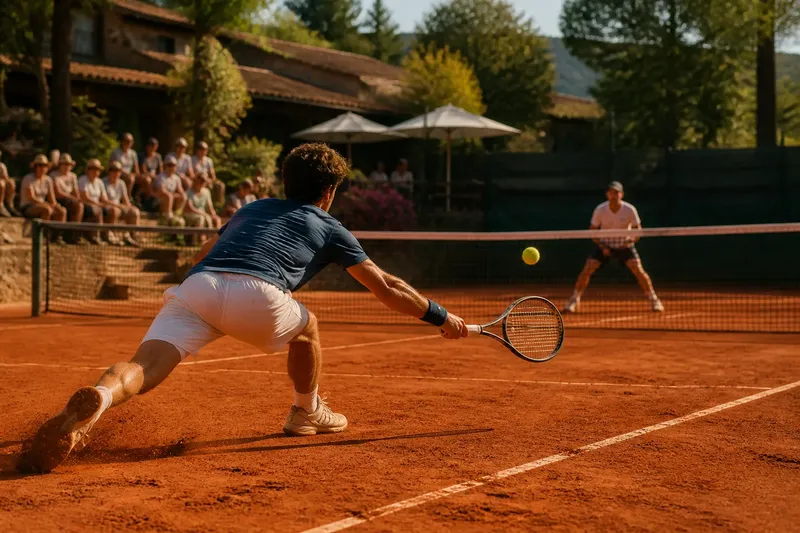
On clay, the ball often takes a higher, more visible bounce than it does on grass. Topspin can make it kick up after landing, giving the receiver time to move back or prepare another shot. Notice whether a player takes the ball early or gives ground to meet it at a comfortable height.
Footwork adds another layer to the rally. Players may slide into a shot, then push back toward balance; a long exchange can become a sequence of skids, recoveries and changes of direction. After a wide ball, watch whether the hitter returns toward the middle or leaves space for the next shot.
Clay makes the shape of a rally easy to read. A deep ball may push an opponent behind the baseline, while a shorter reply can invite a move forward. Rather than counting strokes, notice who is shifting the other player’s position.
Loose clay can leave a visible mark where the ball lands, especially on traditional red clay. That mark may help officials settle a close line call, but it is not always clear from the stands or a broadcast angle. Treat it as a clue, not a verdict.
Grass court urgency
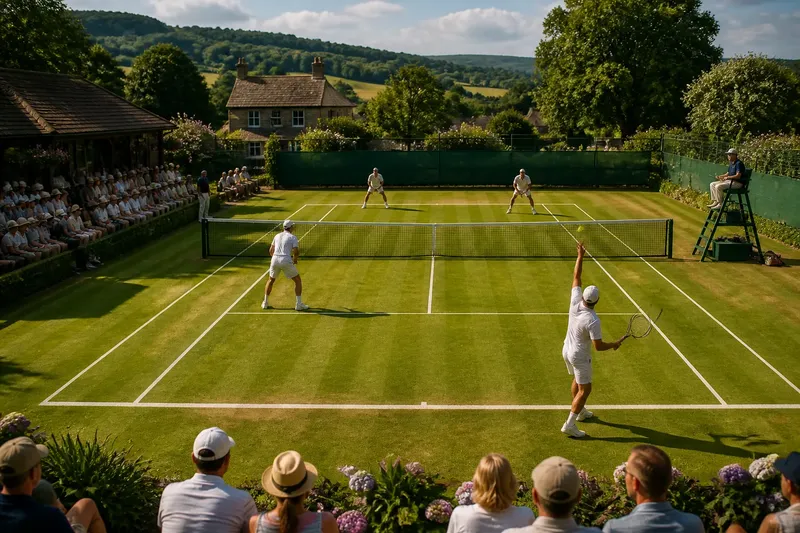
Grass tends to produce a lower, quicker bounce than clay, though the result depends on the court and the ball. A serve or flat groundstroke can reach the receiver with little time to adjust. Watch the receiver’s first move: compact preparation and an early step may matter more than a large backswing.
The surface can reward taking the ball on the rise. When a player meets it soon after the bounce, the opponent has less time to recover. Not every grass rally is brief, though; a well-placed return, defensive slice or missed first strike can create a careful exchange.
At the net, follow the approach as closely as the volley. A player who moves forward after pulling an opponent wide may be trying to close off the reply, while a rushed approach can leave a sharp passing angle open. Ask whether the player moved in behind a difficult ball or simply advanced without creating pressure.
Grass can also alter how the ball behaves from one patch of court to another. A low skid may keep a slice close to the ground, and an uneven bounce can force a last-moment adjustment. Look for how each player adapts across points rather than letting one awkward bounce define the match.
Hard court rhythm
Hard courts offer firm, relatively predictable footing, but they are not all identical. Court pace and bounce can vary, and the ball’s height depends on the shot as well as the surface. Notice how quickly players reset after a wide exchange instead of assuming the court dictates a fixed style.
Because the bounce is often more consistent than on grass, rallies can show a clear back-and-forth rhythm: deep crosscourt shot, recovery toward the center, then a change down the line. A player’s position can reveal whether they expect another crosscourt reply or are guarding against a change of direction.
Hard-court points can make the shift from defense to attack easy to spot. A player may stretch to return a ball, then use the next short reply to step inside the baseline. Watch the change in court position and ask whether depth, angle or a forced error created the opening.
Sound can help, too. A clean strike on a firm court often has a crisp, direct quality, while a mishit may sound flatter or less controlled. Crowd noise and broadcast mixing can blur this cue, so pair what you hear with the ball’s direction and the player’s balance.
What changes across courts?
How does the bounce change the rally?
On clay, look for height and time; on grass, notice a low, quick arrival; on hard court, track how consistent the bounce seems from shot to shot. These are tendencies, not rules, since spin and pace still matter.
Where should you look after a wide shot?
Notice the hitter’s position after the shot and the opponent’s reply. A quick recovery can close an angle, while a delayed one may leave open court for the next ball.
Why do players move forward?
They may be following a short ball, trying to take time away or preparing to volley. The approach makes more sense when you notice whether the previous shot forced a difficult reply.
Does the surface decide the winner?
No single surface explains a match on its own. Serve, shot selection, movement, conditions and the opponent’s choices all shape what happens, so use the court to read a rally rather than predict its outcome.
A clearer viewing choice
For a few points, focus on one part of the rally, such as the receiver’s first response on grass or a player’s transition from defense to attack on hard court. Then shift your attention to the other player. Changing your focus this way lets you follow the action without trying to track every movement at once.
Say you are watching a clay-court match from the shade beside a village court. One player is pulled wide, slides to reach the ball and sends it back crosscourt; the opponent replies short. If the first player steps forward and arrives balanced, the short ball has created an opening. If they are still scrambling, they remain under pressure and must first recover their position.
At a club match or open-air ground, a clear view of the baseline and net can make these cues easier to follow. Clay draws attention to bounce height and recovery, grass to timing, and hard court to rhythm and position. With those differences in mind, the next rally offers more to watch than the ball alone.